Toronto · City-wide
Etobicoke → Scarborough
Asphalt paving
Residential · Commercial
Driveways · Parking lots · Repairs — Toronto, ON

A Smooth New Driveway. A Sharper First Impression.

Asphalt Toronto plans, builds, and repairs asphalt driveways, parking areas, and laneway surfaces across the City of Toronto — from Etobicoke to Scarborough and every neighbourhood in between. Paving is the only trade we practise, and every surface gets the same treatment: excavation to solid ground, a properly compacted granular base, hot-mix asphalt placed and rolled to recognized Ontario specifications, and a written warranty in your hand at the final walkthrough.

Same-business-day callback on every enquiry — or send the contact form on this page and we will call you back the same business day. No-cost, no-obligation on-site assessment.
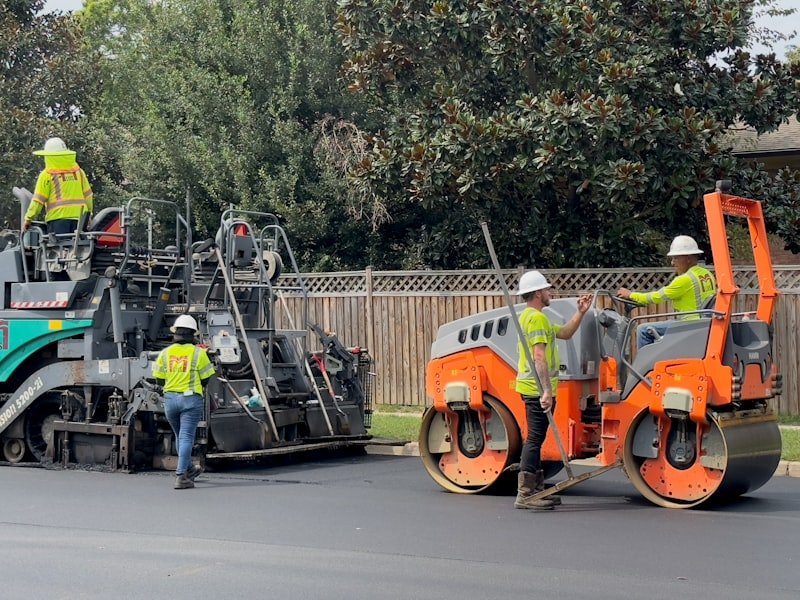
Paving crew placing fresh hot-mix asphalt with a paver on a Toronto street Fig. 01 — Hot-mix placement

Asphalt Built for Toronto Winters.

Fixed price in writing.

The number we quote is the number you pay — a written fixed-price quote after an on-site assessment.

Specification-grade materials.

HL 3 hot mix placed to Ontario provincial standards, compacted and checked at every lift.

Permits handled.

City of Toronto street-work permits and approvals handled end-to-end whenever your project touches the boulevard.

Warranty in writing.

A written workmanship warranty delivered with your final walkthrough on every project, large or small.

01 — The trade

Toronto’s Asphalt Specialists — One Trade, Practised Properly

An asphalt driveway looks like a simple black surface, but it is a structure: native subgrade at the bottom, compacted granular aggregate in the middle, and hot-mix asphalt on top. When a driveway fails early in Toronto, the cause is almost never the asphalt you can see — it is what happens underneath. Clay-heavy soils that hold water, dozens of freeze-thaw cycles every winter, tight lot lines that keep full-size paving machines out, and mature street trees with protected root zones all conspire against shortcuts. A surface that shrugs off a Toronto February is built from the ground up, not brushed on from the top down.

That is why we do one thing. Asphalt paving is the only trade we practise — no fencing crews moonlighting with a roller, no landscaping company squeezing paving between sod jobs. Our estimators, crews, pavers, and compaction equipment exist for hot-mix work, and years of hands-on paving across the region show up in the details: how deep the Granular A goes over soft clay, where the fall line has to run so meltwater never ponds at your garage, how to hand-place mix down a narrow mutual driveway a machine cannot enter, and exactly which projects trigger a City of Toronto street-work permit before a shovel moves.

We serve homeowners, small businesses, and property managers city-wide with new driveway installation, full replacement, resurfacing, widening, parking lot paving, repairs, and preventative maintenance. Every project runs on the same documented playbook — measured assessment, written fixed-price quote, staged construction with compaction verified at each lift, and a written warranty at handover. It is not a complicated promise. It is simply the way asphalt should be done.

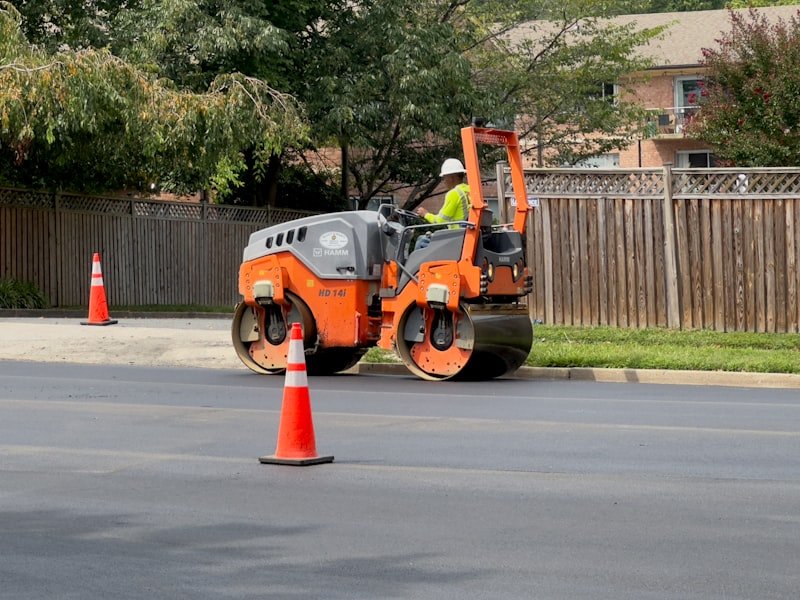
Asphalt Toronto crew member beside a paving machine during hot-mix placement Fig. 02 — One trade, every day
02 — Why us

Why Toronto Homeowners Choose Asphalt Toronto

Anyone can spread hot mix on a warm day. The difference between a driveway that lasts and one that alligators by its third winter is process — and process is something you can see in writing before you sign.

1. Asphalt is the only trade we practise

Specialization compounds. Because our crews pave every working day, mix temperatures, rolling patterns, joint placement, and edge work are muscle memory — not an occasional experiment. You get a crew that has already solved your driveway’s problem on a hundred driveways like it across Toronto.

2. City permits handled end-to-end

Work that touches the Toronto boulevard — the apron, the curb, anything between your lot line and the road — requires a street-work permit under Chapter 743 of the Toronto Municipal Code. We identify whether your project needs one, prepare the metric-scale drawings, carry the application, and post the required financial securities, so the approval is never your headache.

3. Built for freeze-thaw from the base up

Toronto sees roughly 40 to 65 freeze-thaw cycles in a typical year. Our answer is structural: excavate to competent ground, compact Granular A aggregate in controlled lifts, grade a minimum two per cent fall away from buildings, and place HL 3 hot mix at the thickness the traffic actually demands. Water that drains cannot freeze inside your driveway.

4. Documented quality at every stage

Base depths, compaction passes, mix tickets, and grade checks are recorded as the work happens, with a photo record of what got buried. All project documentation is available on request — because a claim you can verify is worth more than a slogan you cannot.

5. Straight pricing, then a fixed written quote

We publish indicative ranges drawn from current Toronto-market sources so you can sanity-check any quote — ours included. Then we put a fixed price in writing after measuring your site. No allowances that balloon later, no per-tonne surprises, no renegotiation at the truck.

6. A written warranty, not a handshake

Every project closes with a walkthrough, a care sheet for the curing period, and a written workmanship warranty delivered before the final invoice. If something is not right, the deficiency list gets closed first. That is the order of operations, every time.

03 — Services

Asphalt Paving Services in Toronto

Eight core services cover almost everything a Toronto property asks of asphalt. Each is quoted fixed-price in writing after an on-site assessment, and each carries the same indicative-pricing transparency: the ranges below describe the published Toronto and Ontario market, and your written quote — not the range — is your price.

Crew placing fresh hot-mix asphalt on a new driveway installation
Svc. 01

New Asphalt Driveway Installation

A complete build for new homes, gravel conversions, and additions: excavation to stable subgrade, geotextile where soft clay demands separation, Granular A crushed aggregate compacted in lifts, precision grading for drainage, and HL 3 hot-mix asphalt placed in two lifts and rolled to a dense, uniform finish. Edges are hand-tamped on an angle and backed with granular so they do not crumble the first time a tire runs the border. Published 2025–2026 GTA market guides put full new installations at roughly $4 to $10 per square foot depending on depth of build-up and access, with a typical two-car driveway landing between $2,500 and $6,500.

$4 – $10 per sq ft installed
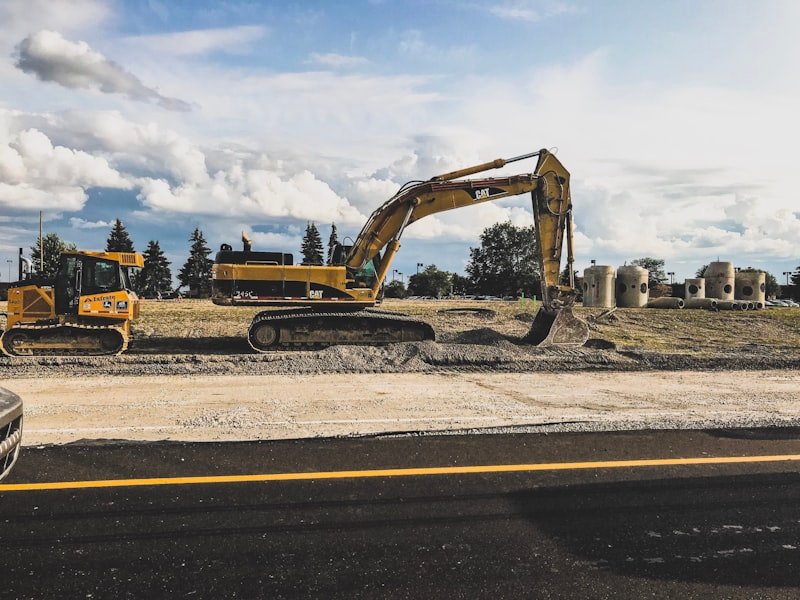
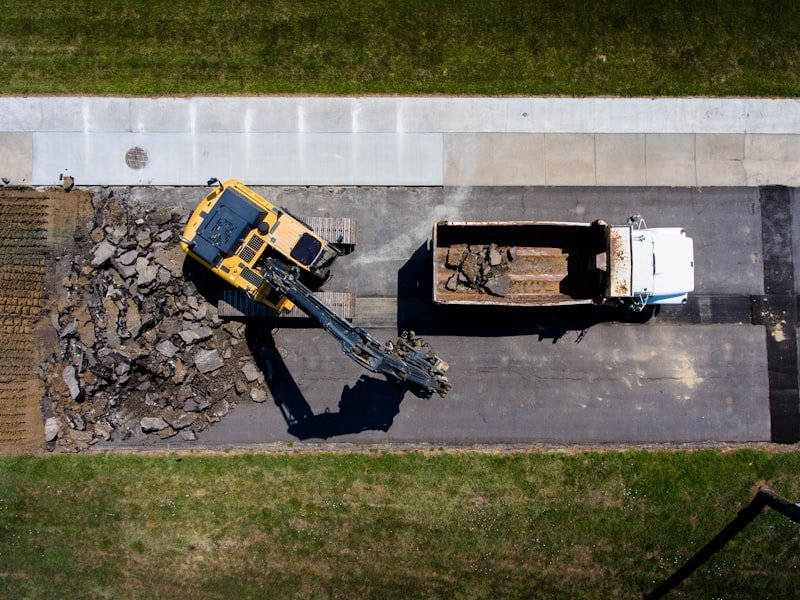
Excavator breaking out and removing an old asphalt driveway for full replacement
Svc. 02

Driveway Removal and Full Replacement

When alligator cracking covers whole panels, the surface heaves, or previous patches have patches, an overlay only photocopies the failure. Replacement breaks out the old asphalt, hauls it for recycling — asphalt is among the most recycled construction materials in Canada — corrects the base and drainage that caused the failure, and rebuilds the structure properly. Published pricing adds $1 to $2 per square foot of removal to the new build-up, putting most Toronto replacements in the $5 to $12 per square foot band. It costs more than an overlay once; it costs less than an overlay twice.

$5 – $12 per sq ft all-in
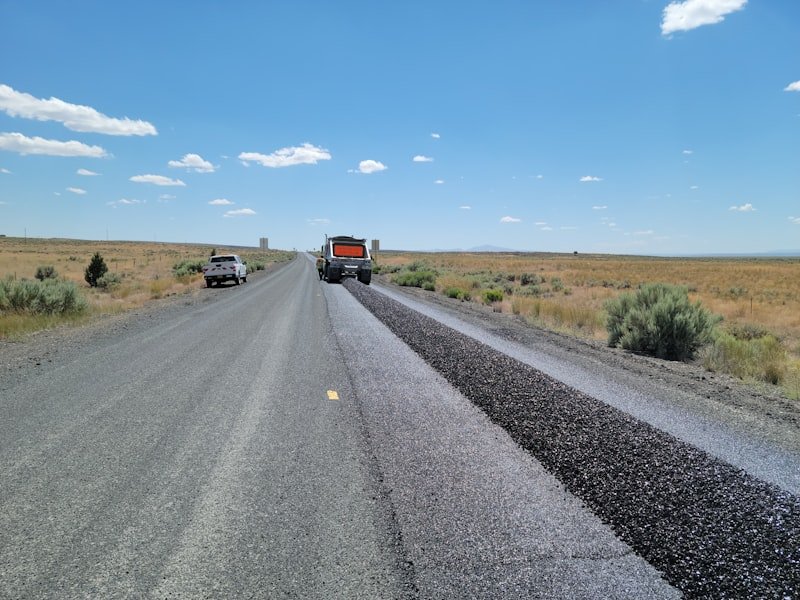
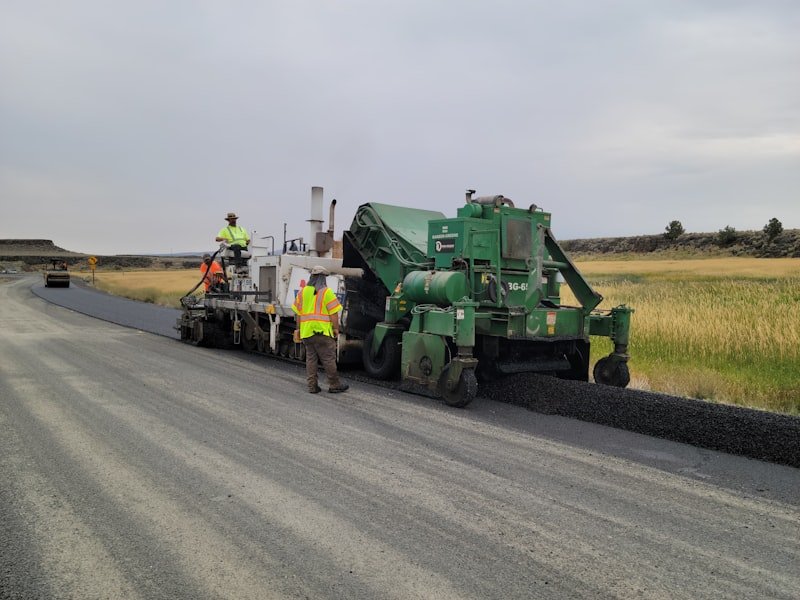
Paving train resurfacing a road with a new hot-mix asphalt overlay
Svc. 03

Asphalt Resurfacing (Overlay)

Where the base is sound and drainage still works, a new hot-mix lift over the milled or cleaned existing surface restores appearance and ride for a fraction of replacement cost — published guides price resurfacing at $1 to $3 per square foot, with Toronto work typically near the top of that band once edges, transitions, and hand work are included. The honest part of this service is the assessment: we tell you plainly when your driveway is a resurfacing candidate and when an overlay would just be an expensive way to hide a base problem for two winters.

$1 – $3 per sq ft overlay
Worker finishing the widened edge of an asphalt driveway approach
Svc. 04

Driveway Widening and Extensions

A second parking strip, a wider approach for two cars, or a turning apron adds daily convenience — and triggers rules. Zoning By-law 569-2013 caps driveway width and protects front-yard soft landscaping, and any widening that touches the boulevard needs City permission before work starts. We confirm what is approvable at your address, design to the by-law, handle the street-work permit where one applies, and match the new asphalt’s structure to the existing so the joint disappears. Added area prices within the standard installation band of $4 to $10 per square foot, with City fees and securities passed through at cost.

$4 – $10 per added sq ft + permits at cost
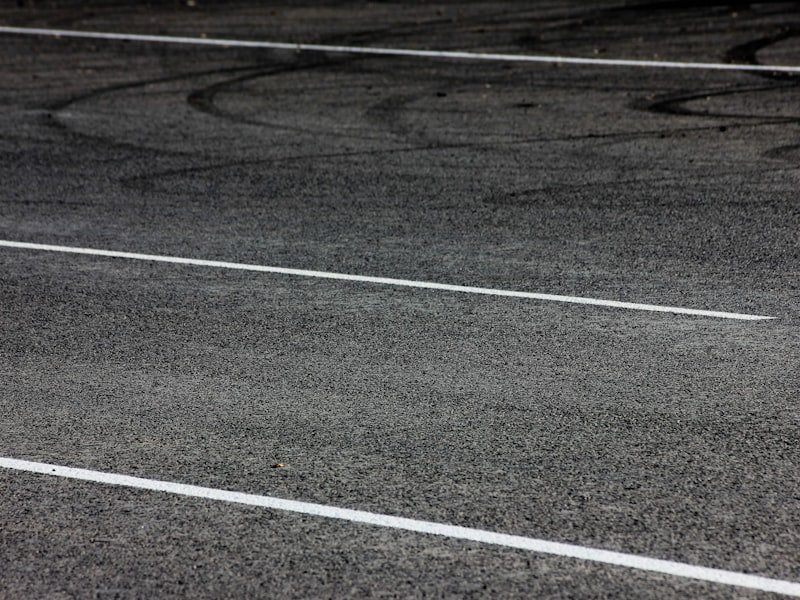
Freshly line-marked asphalt parking lot surface
Svc. 05

Parking Lot Paving and Repair

For plazas, small commercial buildings, places of worship, and multi-unit residential properties, we build and maintain lots engineered for turning trucks and daily traffic: deeper granular structure, binder-plus-surface lifts where loads demand it — including SP 12.5 Superpave mixes for heavier duty — catch-basin adjustment, line painting coordination, and phased scheduling that keeps part of your lot open while we work. Published Ontario pricing runs $3 to $7 per square foot at scale, and every lot is quoted per project after an assessment of soils, drainage, and traffic.

$3 – $7 per sq ft at scale
Paving crew patching and repairing a damaged asphalt surface
Svc. 06

Asphalt Repairs, Patching and Pothole Digouts

A pothole is a drainage problem wearing a disguise. Proper repair saw-cuts a clean rectangle around the failure, excavates the softened base, recompacts new granular, and places hot mix in compacted lifts so the patch outlives the surface around it — the throw-and-roll cold patch you see on winter roads is a temporary measure, not a repair. Repairs are project-quoted with a minimum mobilization; break-out prices within the published $1 to $2 per square foot removal band plus new material. Booked early, a $600 repair prevents a $6,000 replacement.

Project-quoted · minimum mobilization
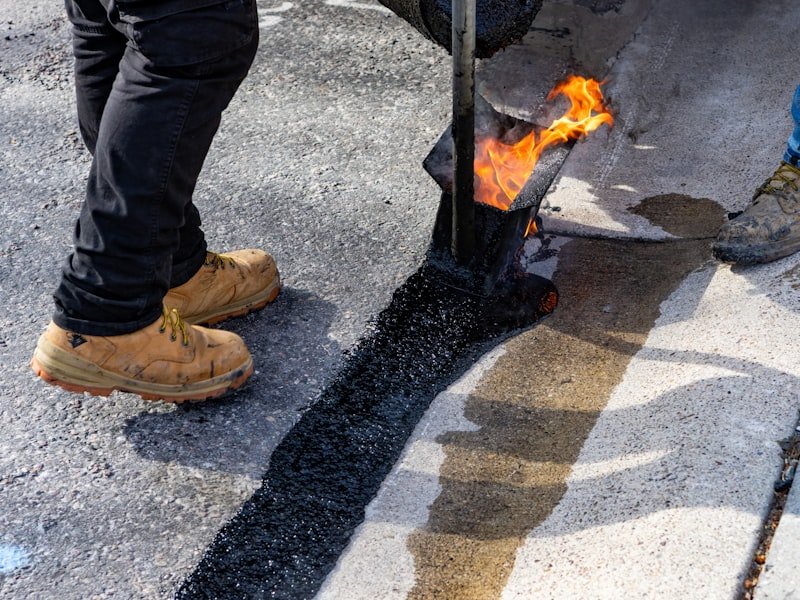
Hot-applied crack sealing with a torch on dark asphalt
Svc. 07

Crack Sealing and Sealcoating

Toronto’s freeze-thaw climate makes crack management the highest-return maintenance an asphalt owner can buy. Hot-applied rubberized sealant keeps meltwater out of the structure, and a quality sealcoat slows oxidation, fuel staining, and surface raveling — first application commonly about a year after new paving, then every two to four years. Published Ontario guides price sealing work at roughly $0.15 to $1.00 per square foot depending on condition and preparation. It is quiet, one-day work that adds years to the loud, expensive kind.

$0.15 – $1.00 per sq ft
Aerial view of grading equipment preparing a granular base
Svc. 08

Grading, Granular Base and Drainage Correction

Some driveways do not need new asphalt — they need the water managed. We regrade to establish a minimum two per cent fall away from garages and foundations, rebuild or deepen Granular A bases over soft spots, install geotextile separation on poor subgrades, and add swales or drainage structures where surface fall alone cannot do the job. Published site-preparation pricing runs $1 to $3 per square foot, with dedicated drainage systems typically adding $500 to $3,000. Fix the water first and everything above it lasts longer.

$1 – $3 per sq ft site prep

Not sure which service fits? Call (613) 324-9141 — we will tell you straight, even when the answer is “not yet.”

Call (613) 324-9141
04 — Indicative pricing

Indicative Asphalt Paving Prices in Toronto

These ranges are drawn from published 2025–2026 Toronto, GTA, and Ontario market sources so you can budget realistically before anyone visits your property. They describe the market as a whole — not your site, and not our quotation.

Featured — the flagship build

New asphalt driveway (full build-up)

$4 – $10 per sq ft

Excavation, compacted Granular A base, and hot-mix surface; published 2025–2026 Toronto and GTA market guides. Typical two-car driveway: $2,500 – $6,500 before extras.

Removal and full replacement

$5 – $12 per sq ft

Adds break-out and disposal of the old asphalt, published at $1 – $2 per sq ft, to the new build-up.

Resurfacing (asphalt overlay)

$1 – $3 per sq ft

Requires a structurally sound base and working drainage; Toronto jobs often price toward the top of this published band.

Driveway widening and extensions

$4 – $10 per added sq ft

Plus City of Toronto permit fees and financial securities at cost wherever the boulevard is touched.

Parking lots and commercial paving

$3 – $7 per sq ft

Published Ontario baseline; larger areas benefit from scale and are quoted per project after assessment.

Asphalt repairs, patching and digouts

Project-quoted

Break-out priced within the published $1 – $2 per sq ft removal band plus new hot mix; a minimum mobilization applies.

Crack sealing and sealcoating

$0.15 – $1.00 per sq ft

Published Ontario guides; surface condition and preparation drive where a property lands in the range.

Grading, granular base and drainage

$1 – $3 per sq ft

Published site-preparation band; dedicated drainage systems typically add $500 – $3,000 depending on complexity.

What moves a project inside these ranges: total area and shape, access — a narrow mutual drive that forces hand placement paves slower than an open suburban lot — removal depth and disposal volume, the condition of the existing base, how much regrading the drainage requires, chosen asphalt thickness and mix, tree protection measures on treed streets, and time of season. Small areas carry proportionally higher per-square-foot costs because mobilization is fixed; large, open areas earn scale.

Please read before comparing quotes: Indicative ranges exclude City of Toronto permit fees and financial securities (passed through at cost), engineered drawings where a project requires them (at cost), HST at 13 per cent, and unforeseen subsurface conditions such as buried debris, unstable fill, or unmarked structures discovered after excavation begins. Indicative pricing describes the published market; it is not a quotation for your property and is not an offer to contract. Your price is the written fixed-price quote we prepare after your on-site assessment — and that written number is the number you pay.
05 — Common problems

Common Asphalt Problems We Solve Across Toronto

Most calls we take start with one of six situations — each one rooted in a real Toronto condition, and each one fixable when the cause gets treated instead of the symptom.

Case 01

Freeze-thaw cracking that spreads every spring

Water enters a hairline crack, freezes, and expands with enormous force — then Toronto hands it 40 to 65 chances a year to repeat the trick, with peaks around December and March. Hairlines become networks, networks become alligatored panels. Annual hot-applied crack sealing stops the cycle early; where alligatoring has set in, a saw-cut digout and base repair is the honest fix.

Case 02

Ponding, ice sheets, and a wet garage threshold

Much of Toronto sits on clay-rich glacial till that drains slowly, so a driveway graded flat — or settled flat — turns every thaw into a skating rink and pushes meltwater at your slab. We re-establish a minimum two per cent fall away from the building, and where geometry will not allow it, we quote a drainage structure that will.

Case 03

Crumbling, biting edges

Asphalt edges left square and unsupported snap off under tire load — the most common early failure on otherwise decent driveways. Our edges are placed thicker, hand-tamped on a 45-degree angle, and backed with compacted granular or topsoil so the border carries weight instead of shedding it.

Case 04

Settlement over utility trenches and at the garage apron

Trenches for water, sewer, or gas that were backfilled without full compaction keep settling for years, telegraphing a sunken stripe through the asphalt above; garage aprons take the extra torque of turning wheels. The repair is a clean digout, granular recompacted in proper lifts, and new hot mix — not another skim coat that sinks with the hole.

Case 05

Root heave on Toronto’s tree-lined streets

Mature canopy is part of why people buy in Leaside, High Park, or The Beaches — and City rules protect it: Chapter 813 covers City-owned trees and private trees of 30 centimetres diameter and larger, which can shape how close and how deep we excavate. We design around protected root zones with adjusted alignments, hand excavation where required, and build-ups that tolerate minor movement.

Case 06

Rutting and soft spots under summer heat

Wheel ruts and spongy patches mean the granular base is too thin, was never compacted in lifts, or was contaminated by pumping clay — the asphalt is simply reporting the news from below. We rebuild the base to depth over geotextile where the subgrade is poor, then repave with the mix and thickness the traffic actually calls for.

06 — The homeowner checklist

The Toronto Homeowner’s Paving Checklist

You do not need to become a paving expert to buy paving well. You need to know the standard the work should meet — and the questions that reveal whether a contractor intends to meet it.

The standard we work to on every project

  • Ontario One Call utility locates completed before any excavation begins — required by provincial law, and non-negotiable on our sites.
  • Excavation carried to competent subgrade, with soft spots corrected rather than covered.
  • Granular A crushed aggregate meeting OPSS 1010, placed and compacted in controlled lifts — never dumped and bladed in a single pass.
  • A minimum two per cent surface fall away from buildings, checked with instruments, not eyeballed.
  • HL 3 hot mix placed in line with OPSS.MUNI 310, in two lifts on new construction, with compaction verified at each lift.
  • Edges thickened, hand-tamped on an angle, and backed so borders carry load.
  • A staged photo record of what got buried — base depths and compaction included — available to you on request.
  • A written warranty and curing care sheet delivered at the final walkthrough, before the final invoice.

Eight questions to ask any paving contractor before you sign

  1. What granular base depth are you quoting, and will it be compacted in lifts? Ask for the numbers in writing.
  2. Which asphalt mix will you place, and what is the total compacted thickness — not the loose, raked thickness?
  3. Who applies for the City street-work permit if the boulevard or apron is touched, and is the eight-week City lead time in your schedule?
  4. What is the drainage plan? Where does the fall run, and what per cent grade will the finished surface hold?
  5. How are the edges supported so they do not crumble in the first season?
  6. What exactly is excluded from the price — permits, HST, unforeseen subsurface conditions — and how are exclusions billed if they arise?
  7. Is the warranty in writing, what does it cover, and when do I receive it?
  8. What are your weather standards — at what temperature will you decline to place hot mix rather than compromise compaction?
07 — How it works

How It Works: From First Call to Written Warranty

Six steps, each with a commitment we control — so you always know what happens next and when.

01

Step 1 — Reach out, hear back the same business day

Call (613) 324-9141 or send the contact form. Every enquiry gets a callback the same business day — a real conversation about your surface, your timeline, and whether we are the right fit.

02

Step 2 — On-site assessment within three business days

We book your no-cost, no-obligation assessment within three business days. On site we measure, shoot levels, probe the existing base, map the drainage, note tree and access constraints, and photograph the conditions that will shape the design.

03

Step 3 — Written fixed-price quote within two business days

Within two business days of the assessment you receive a written quote itemizing scope, base depth, mix, compacted thickness, drainage plan, schedule, exclusions, and warranty terms. Fixed means fixed.

04

Step 4 — Permits, locates, and approvals

Where the boulevard is involved, we prepare and carry the Chapter 743 street-work permit application — including the City’s eight-week lead time, flagged in your schedule from day one — and post the required securities. Ontario One Call locates are requested before any digging, and tree-protection requirements are confirmed on treed lots.

05

Step 5 — The build, staged and verified

Excavation to competent ground, granular placed and compacted in lifts, grades instrument-checked to hold the fall, then hot mix placed at temperature and rolled to density — with edges hand-finished and every stage documented before the next covers it.

06

Step 6 — Walkthrough, care sheet, written warranty

We walk the finished surface with you, close any deficiency list first, and hand over your curing care sheet and written workmanship warranty before the final invoice. Then the driveway gets to prove it, winter after winter.

Start with Step 1: call (613) 324-9141 or send the form — same-business-day callback.

Call now Send the form
08 — Service areas

Asphalt Paving Across Every Toronto Neighbourhood

We pave city-wide, and we plan each job around the fabric of its street — because a 1920s semi off Roncesvalles and a 1970s side-split in Agincourt do not present the same driveway.

In Etobicoke and the west end — Mimico, New Toronto, Long Branch, Alderwood, The Kingsway, Islington Village, and Rexdale — postwar lots with generous frontages suit full machine paving, while closer to the core in High Park, Roncesvalles, Bloor West Village, The Junction, and Parkdale, narrow lots and shared mutual driveways call for hand placement and careful joint work.

Across North York and midtown — Willowdale, Bayview Village, Don Mills, York Mills, Downsview, Lawrence Park, Forest Hill, and Leaside — long suburban driveways, circular approaches, and mature protected trees shape both design and access, and in Weston and Mount Dennis the older housing stock often hides base problems worth probing before quoting.

In Scarborough and the east — Agincourt, Malvern, Wexford, Birch Cliff, Cliffside, Guildwood, and West Hill — wider lots and double drives dominate, while East York, The Beaches, Leslieville, Riverdale, and Danforth Village bring the classic Toronto puzzle of tight frontages, boulevard aprons, and street trees. Wherever your address falls, the assessment, the quote, and the standard of work are identical.

MimicoNew TorontoLong BranchAlderwoodThe Kingsway Islington VillageRexdaleHigh ParkRoncesvallesBloor West Village The JunctionParkdaleWillowdaleBayview VillageDon Mills York MillsDownsviewLawrence ParkForest HillLeaside WestonMount DennisAgincourtMalvernWexford Birch CliffCliffsideGuildwoodWest HillEast York The BeachesLeslievilleRiverdaleDanforth Village
09 — The local file

Paving in Toronto: The Local Rules, Climate, and Ground Truth

Toronto regulates more of your driveway than most owners expect, and its climate and soils punish guesswork. Here is the local knowledge baked into every quote we write.

File 01 · Chapter 743

Repaving and the City boulevard — Municipal Code Chapter 743

The strip between your property line and the road — boulevard, apron, curb — belongs to the City. Under Chapter 743, Article VII, constructing, reconstructing, relocating, or altering a driveway within that strip, and that explicitly includes repaving it, requires a street-work permit from the district Right-of-Way Management office. Applications call for metric-scale drawings, must be submitted at least eight weeks before work begins, and require financial securities the City returns once staff confirm the build matches the approved plans. Unpermitted boulevard work risks fines and a restoration order. We determine which side of the line your project sits on and carry the application when one is needed.

File 02 · Chapter 918

Front yard parking pads — Municipal Code Chapter 918

Parking in the front yard or on the boulevard is a regulated privilege in Toronto, not a right. Chapter 918 pads require an annual City licence — renewal published at $303.32 plus HST as of 2024 — and the licence does not transfer when a home sells. Approved pads must be 2.2 to 2.6 metres wide, sloped upward at two to six per cent from the curb or sidewalk, and surfaced in permeable paving — which standard hot-mix asphalt is not. Large parts of the former City of Toronto accept no new applications at all. We tell you plainly when asphalt is not the approvable product for a pad, and design a compliant alternative instead of selling you a violation.

File 03 · By-law 569-2013

Driveway width and landscaping — Zoning By-law 569-2013

Toronto’s harmonized zoning by-law caps residential driveway width based on your lot and protects front-yard greenery: where a lot has no permitted driveway, at least 75 per cent of the front yard must remain soft landscaping, and even with a permitted driveway, minimum landscaping still applies. Dimensions outside the by-law need Committee of Adjustment authorization before anyone should pave. We check zoning at your address before quoting a widening — the cheapest variance is the one you never need.

File 04 · Climate

The freeze-thaw ledger — 40 to 65 cycles a year

Published analyses of Environment Canada records put Toronto at roughly 40 to 65 freeze-thaw cycles in a typical year, and University of Toronto research shows the action peaking around December and March — exactly when meltwater is most available to refreeze. Each cycle pries at every crack and void in a pavement. The design response is structural: dense compaction so there is nowhere for water to sit, drainage so it leaves before it freezes, and sealed cracks so it never gets in.

File 05 · Ground

Clay till, old shorelines, and where the water goes

Much of Toronto is built on clay-rich glacial till that holds water and swells and shrinks with the seasons, while sandier, faster-draining ground follows the old Lake Iroquois shoreline through parts of midtown. On clay, we deepen the granular structure, add geotextile separation where the subgrade pumps, and treat the two per cent fall as sacred; on sand, we focus on edge containment and surface water routing. Same city, different driveways — the assessment tells us which one yours is.

File 06 · The older city

Protected trees, mutual driveways, and the older city

Chapter 813 protects City-owned trees and private trees of 30 centimetres diameter and larger, so excavation near a mature root zone may need permits and hand work — a routine part of paving in Toronto’s leafiest neighbourhoods. The older city also runs on shared mutual driveways between semis: repaving one usually means coordinating both owners, documenting the cost split in writing, and getting Transportation Services permission before any widening. We have a settled process for all of it.

10 — Proof

What Toronto Property Owners Say

General attributions only — the words are our customers’, the addresses stay theirs.

The quote was itemized down to base depth and asphalt thickness, and the final invoice matched it to the dollar. Two springs in, the driveway still sheds water exactly the way they said it would. — Homeowner, Leaside
They flagged the City permit for our boulevard apron before we signed anything, built the eight-week lead time into the schedule, and hit every date they gave us. — Homeowner, The Junction
Three buildings resurfaced in one season with part of each lot kept open the whole time. The compaction records they handed over made our board meeting very short. — Property Manager, North York
Our old driveway ponded at the garage every thaw. They regraded, rebuilt the base, and it has stayed dead flat and dry through two winters of freeze and melt. — Homeowner, Birch Cliff
A narrow mutual drive between two hundred-year-old houses — they hand-placed the asphalt where no machine could fit and the joint against the neighbour’s side is invisible. — Homeowner, Riverdale
The indicative range on their site is what convinced us to call, and the written quote landed inside it. No upsell, no drama, no surprises. — Homeowner, Alderwood
Pothole digouts across our customer parking were scheduled around opening hours and done in a day. You cannot tell where the repairs start and stop. — Small Business Owner, Scarborough
11 — Questions

Asphalt Paving in Toronto — Frequently Asked Questions

Direct answers, with the by-law numbers and published figures behind them.

How much does asphalt paving cost in Toronto?

Published 2025–2026 guides for Toronto and the GTA put standard asphalt driveway installation at roughly $4 to $10 per square foot, with a typical two-car driveway landing between $2,500 and $6,500. Resurfacing over a sound base runs about $1 to $3 per square foot in the same sources. These are indicative market ranges, not a quotation — your price is the written fixed-price quote prepared after an on-site assessment.

Do I need a permit to repave my driveway in Toronto?

Like-for-like repaving entirely on your own property generally proceeds without a building permit. But the moment work touches the City boulevard — the apron, the curb, anything between your lot line and the road — Municipal Code Chapter 743 requires a street-work permit from Right-of-Way Management, applied for at least eight weeks before work begins. We identify which side of that line your project sits on and handle the application when one is needed.

Can I widen my driveway or add a front yard parking pad?

Sometimes. Zoning By-law 569-2013 caps driveway width and requires front-yard soft landscaping, and boulevard work needs City permission. Front yard parking pads under Chapter 918 are tightly restricted: much of the former City of Toronto accepts no new applications, approved pads must be 2.2 to 2.6 metres wide with a permeable surface, and the annual City licence — published at $303.32 plus HST for 2024 renewals — does not transfer when a home sells. We confirm what is approvable at your address before quoting anything.

What asphalt mix and base do you use?

HL 3 surface-course hot mix — the established Ontario standard for residential driveways — placed in line with OPSS.MUNI 310, over Granular A crushed aggregate meeting OPSS 1010 and compacted in controlled lifts. Heavier-duty surfaces such as parking lots may call for a binder course or an SP 12.5 Superpave mix. The exact structure for your project is specified in the written quote, not improvised on the day.

How long does an asphalt driveway last in Toronto?

Published Ontario guides put asphalt driveway lifespans at 15 to 30 years, and the spread is mostly explained below the surface: base depth, compaction, and drainage. In Toronto’s freeze-thaw climate, annual crack attention and periodic sealcoating are what carry a driveway to the far end of that range; resurfacing typically enters the conversation after 10 to 15 years of service.

When can I drive on new asphalt?

Stay off it entirely for the first 24 hours, and keep vehicles off for 48 to 72 hours in warm weather — longer during heat waves, when fresh mix stays soft. Asphalt continues curing for months after placement, so through the first season avoid dry-steering in place, motorcycle kickstands, trailer tongues, and point loads without a board underneath. Your care sheet covers all of it.

Should I resurface or fully replace my driveway?

Resurface when the base is structurally sound: cracking is limited and surface-level, drainage still works, and grades hold. Replace when alligator cracking covers panels, the surface heaves or ruts, or water sits — an overlay over a failed base simply prints the old cracks through the new surface within a couple of winters. The assessment answers this honestly, and we quote whichever your driveway actually needs.

What time of year can you pave in Toronto?

The Toronto paving season generally runs from late April through November, because hot mix needs sustained above-freezing temperatures to compact to density before it cools — and suppliers’ plants close for winter. Spring bookings get first choice of schedule; crack sealing and repairs extend into the shoulder seasons. We would rather decline a cold-weather placement than deliver a surface that fails its first winter.

Why did my driveway crack after only a few years?

Almost always the base, not the blacktop: granular that was too thin, never compacted in lifts, or placed over wet clay; missing edge support; or a flat grade that let water sit and freeze. Toronto’s 40 to 65 annual freeze-thaw cycles find every one of those shortcuts quickly. The fix that lasts treats the cause — which is why our quotes itemize base depth and compaction instead of hiding them.

How do you handle drainage on clay soil?

We grade a minimum two per cent fall away from buildings and check it with instruments, deepen the Granular A structure over soft clay, and add geotextile separation where the subgrade pumps under load. Where the site’s geometry cannot achieve surface fall — common on flat clay lots — we quote a swale or drainage structure rather than pretending slope into a plan that cannot hold it.

Should I sealcoat my driveway, and how often?

Yes, as protection rather than decoration: sealcoating slows oxidation, surface raveling, and fluid staining. The first application typically follows about a year after new paving so the surface fully cures, then every two to four years depending on exposure and wear. Published Ontario guides price sealing work at roughly $0.15 to $1.00 per square foot, and pairing it with hot-applied crack sealing is the highest-value maintenance combination in this climate.

Do you pave shared mutual driveways?

Yes — they are a signature of Toronto’s older neighbourhoods, and we have a settled process: both owners agree to scope and cost split in writing before work starts, hand placement handles runs too narrow for machines, and any change to the driveway’s footprint is checked against City requirements first. Done properly, the shared joint is the strongest line on the surface instead of the first one to open.

How long does the work take on site?

Most residential replacements run one to two working days once permits and utility locates have cleared — excavation and base one day, paving the next, with weather holding the final say. Straightforward resurfacing is often a single day; parking lots are phased so part of the lot stays open throughout. Your written quote includes the schedule, and the schedule includes the City’s lead times, not just ours.
12 — Get your quote

Get Your Written Quote — Asphalt Paving Anywhere in Toronto

Whether it is a cracked single strip in Leslieville, a widened double drive in Willowdale, or a phased parking lot in Scarborough, the path is the same: call (613) 324-9141 or send the contact form on this page. You will hear back the same business day, see us on site for a no-cost, no-obligation assessment within three business days, and hold a written fixed-price quote within two business days after that — base depth, mix, thickness, drainage, schedule, and warranty, all in writing before you commit to anything.

(613) 324-9141

Toronto winters are hard on asphalt. They are not hard on asphalt that was built for them. Let us show you the difference on your own driveway.

Same-business-day callback

Every call and every form submission gets a real callback the same business day.

Assessment in 3 business days

A no-cost, no-obligation on-site assessment booked within three business days.

Written quote in 2 business days

Your fixed-price quote follows within two business days of the assessment.

All of Toronto

Etobicoke to Scarborough, Steeles to the lake — one standard of work city-wide.

Call (613) 324-9141 now — or send the form and we will call you back today.